
Utilities should be paying much more for transformers, but won't
They are incentivized to waste electricity anywhere it results in less capex.
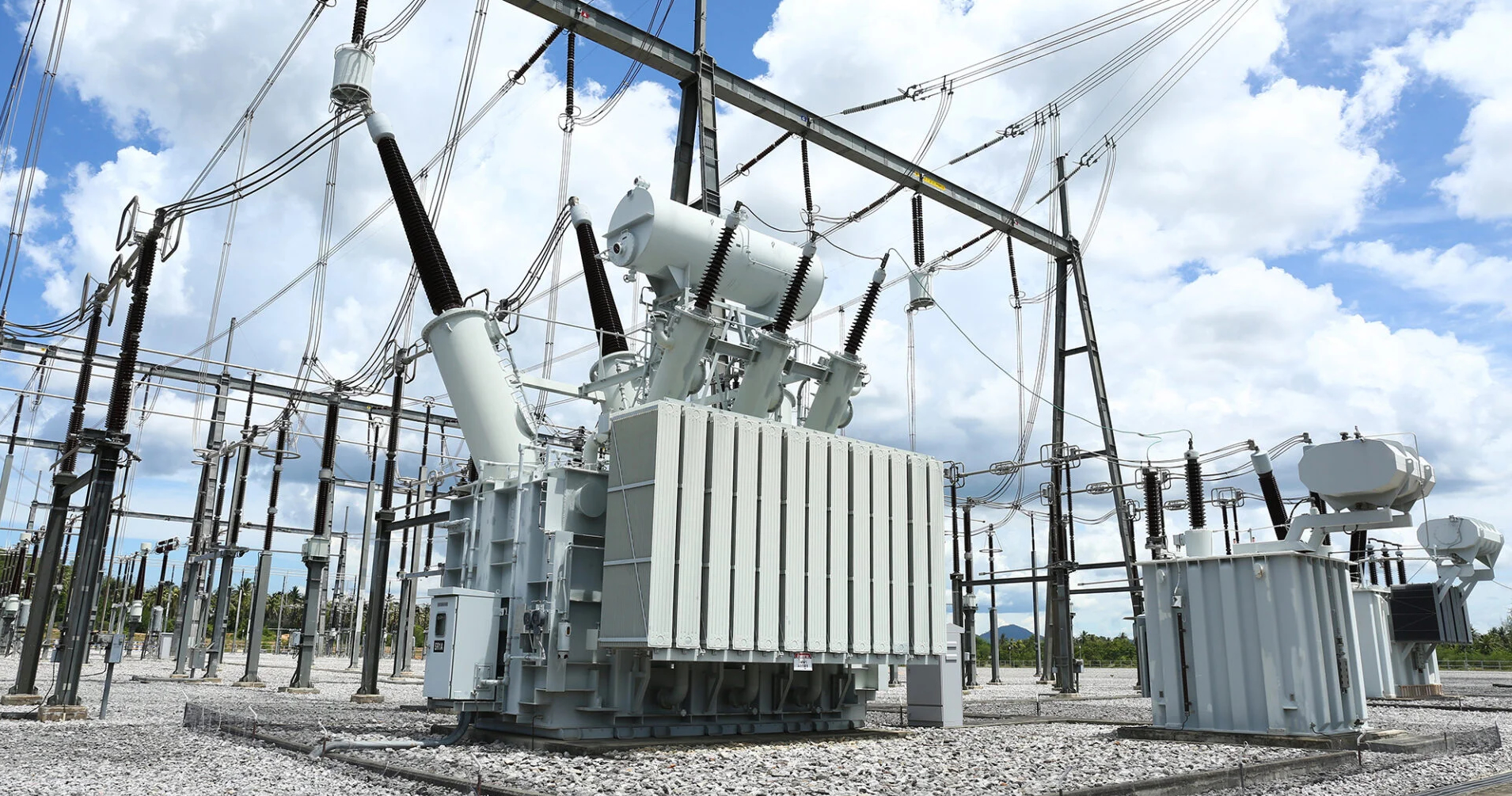
Utilities should be paying much more for transformers. But they're not going to, since they're incentivized to waste electricity anywhere it results in less capex. The root of the problem is that we don't make enough of the materials that allow better transformers.
About 2 percent of all electricity generated in the United States vanishes inside the green boxes on concrete pads and gray cans on utility poles dotting the landscape. These are distribution transformers—the last-mile voltage converters that turn medium-voltage power into the 120/240 volts we use at home. Physically, they’re simple: coils of copper or aluminum wrapped around a steel core. Because the design is so basic, efficiency and cost depend almost entirely on the metals chosen, not on clever engineering tweaks. Each transformer therefore tells a story about the incentives its buyer faces: pay for more or better materials and waste less energy, or stick with the status quo and let the gigawatt-hours slip away.
Over a 30- to 40-year life, the energy a typical transformer dissipates as heat can cost close to five times its purchase price. Upgrading to a higher-grade core alloy—or simply right-sizing the unit—would save customers billions of dollars per year. Yet many U.S. utilities still order the cheapest devices that meet federal minimum standards, and virtually none adopt the higher-performing devices common in other countries. Why? Because ratemaking rules let them pass those losses straight through to customers and penalize them for spending that doesn’t add capacity directly.
The picture has grown even murkier since supply chain shocks stretched already-long delivery times beyond two years. When capacity itself is scarce, any change that slows production looks risky, no matter how much lifetime value it delivers. To solve the shortage—and unlock the efficiency gains—we must untangle how utility incentives, regulations, and manufacturing constraints converge in the design of the materials inside each transformer. That’s the story this post explores.
So, how much more should we be willing to pay for a transformer that wastes less?
Power transformers are conductive coils of copper or aluminum wound around a magnetically permeable core with a simple loop geometry. The windings are responsible for resistive losses that scale with the instantaneous load. Core losses, by contrast, are incurred at every reversal of the magnetic field—twice per cycle of the 60 Hz mains. They don’t vary with load, but they cost more when they occur at peak hours. The windings and the core also constrain each other geometrically: the cross-section of the windings must fit through the loop of the core, and the core’s cross-section must be large enough that it doesn’t saturate. Because of this mutual constraint, you can’t compare core materials just by swapping one for another in the same geometry. Only by asking
"What is the total cost of a transformer that's optimized for material Y, compared to one optimized for material X?"
can we see how the choice of core material affects the cost of the whole system. In any given transformer, core and winding losses arise independently. But change the core material and its loss and saturation properties change the optimal windings too, so any resulting changes in winding cost and winding loss have to be attributed to the core material.
So we built a transformer design-optimization tool to compare total cost of ownership (TCO: the net present value of upfront cost plus the cost of losses) between transformers designed around different core materials.[1] Suppose we’re given a nameplate power rating, an expected typical utilization (average power output as a fraction of the nameplate rating), pricing data for peak and off-peak power, and a high-efficiency core material[2] that costs some multiple of the electrical steel most commonly in use. When would a rational buyer choose the design that uses the more expensive core material?
The chart below maps the answer. For each combination of cost multiple and utilization, the region is yellow if the design using the more expensive core material has the lower TCO, and blue otherwise. The more expensive material wins almost everywhere, even at more than three times the cost of the legacy material. That makes sense: at moderate utilizations, more than two-thirds of a transformer’s TCO is incurred during operation rather than upfront.

This matches what we see in the world. In many places, newer materials called ‘amorphous’ or ‘nanocrystalline amorphous’ alloys dominate new installations in many classes of power transformer. Not in the US, where vertically integrated distribution and generation monopolies, “rate-of-return” regulation, and “cost-of-service ratemaking” combine to steer incentives away from efficient transformers.
Distribution Transformers
In 1992, Congress gave the Department of Energy the authority to regulate the efficiency of distribution transformers. The first such regulations were issued in 2007.

Distribution transformers come in many sizes and configurations between 10 and 5000 kVA. The barrel-sized pole-mounted type ubiquitous in North America is the most visible, but the pad-mounted units that provide the last AC power conversion step for new datacenters and housing developments also fall in this category. Sitting at the end of the line, they operate at low and variable utilization, averaging less than 25% of their nameplate capacity. That means a distribution transformer spends much more of its life away from its peak efficiency than the large power transformers—100 MVA and above—used in long-range transmission.

At low utilization, most of a transformer’s losses are in the core rather than the windings. Core losses come from hysteresis: each time the alternating current reverses, the magnetization of the core’s ferromagnetic loop has to reverse too. At higher utilization, resistive losses in the copper, aluminum, or silver windings dominate.
Because distribution transformers dissipate nearly 2% of all the electricity generated in the US with nothing to show for it but a 120 Hz hum, they are an unusually high-leverage target for efficiency improvements. In a 2022 Notice of Proposed Rulemaking (NPRM), DoE proposed rules that would roughly halve losses in new distribution transformers. It estimated a net present value of $4.28–12.8 billion over the lifetime of the transformers installed under the rule—for just one category of transformer (liquid-immersed, about half the total impact), and excluding the (favorable) emissions impacts.[3] The main mechanism would have been cutting core losses by switching many regulated categories of transformer from grain-oriented electrical steel (GOES) to amorphous or nanocrystalline (AM/NCA) steels. In Canada, China, and elsewhere, AM/NCA steels already dominate new distribution transformer production—but not in the US.
The principal objection to the proposed rule was a lack of production capacity for GOES and its higher-efficiency alternatives. There is only one US manufacturer of GOES, and only one of utility-scale amorphous material.
Unfortunately, although the rule was not to take effect until 2027, the NPRM landed in the middle of a broad shortage of electrical components, just as electricity demand began growing again after thirty years of essentially flat demand. Not being able to deliver new capacity at all was a bigger worry than delivering it at higher cost. Even in early 2025, lead times for distribution transformers can exceed two years. In January 2024, Congress threatened to withdraw DoE’s authority to regulate distribution transformer efficiency unless it released an amended proposal. DoE did so in April 2024, with the rule’s estimated net benefit cut sharply, to $0.56–3.41 billion in the liquid-immersed category.
The public comments DoE collected during the rulemaking show the reasoning. I’ve grouped the main objections into a few categories below, alongside our rebuttals.

Nearly all of these objections are variations on one argument, the same one made in the press around the Senate action in January 2024: when grid buildout is bottlenecked, getting more transformers matters more than making each one more efficient.
But if the bottleneck is manufacturing capacity for the magnetic materials, and those materials—though slightly more expensive than legacy GOES—should more than pay for themselves, why didn’t the capacity exist already? Utilities are savvy customers. If the new materials save the public money, as DoE claims, why don’t they save the utilities money too? How do their incentives differ?
Utilities manage capacity, not opportunity cost
Discussions of utility incentives usually center on rate-of-return regulation, which US states commonly impose on distribution and generation monopolies. Utilities are permitted to return a regulated fraction of their equity and capital to investors and bondholders. That gives them a profit incentive to grow their capital base beyond the optimal balance of capex and opex: the Averch-Johnson effect. More expensive but lower-loss transformers would seem to fit that incentive perfectly. So why don’t utilities buy them?
Utilities do buy distribution transformers on a total-cost-of-ownership basis, choosing the unit that minimizes the sum of its first cost and the cost attributed to its electrical losses. This makes sense: losses make up more than 80% of the TCO of a typically sized distribution transformer. The convention used by utilities and transformer makers[4] is to take the average no-load losses (from the core) and loaded losses (from the windings) and convert them to dollars using “capitalization factors,” which reflect the cost of serving those losses with base-load or peak capacity:
TCO = CF × FCR + A × PNL + B × PLL
CF: first cost
FCR: capital recovery factor (lifetimes are 25–40 years, so between 2 and 3 at foreseeable costs of capital to utilities)
A: capitalization factor for average no-load losses (PNL)
B: capitalization factor for average loaded losses (PLL)
In principle, the utility determines A and B for the population of transformers it wants to replace, gives those values to the manufacturer, and receives the transformer that minimizes the resulting TCO. The catch is what A and B measure. Even without any distortion by the utility, they reflect the capital cost of building more generation capacity to cover transformer losses, not the levelized cost of the power those losses consume. Put simply, this “implicit TCO” minimizes the capital intensity of the utility’s capacity overall. It does not minimize the explicit TCO of a transformer for a given service, or the lifetime cost of delivering service to the utility’s customers.
In the US, A and B vary from utility to utility where the data has been made available. A 2022 Bonneville Power Administration survey of Pacific Northwest utilities gives a representative picture:

This answers a natural question: if utilities already weigh an implicit TCO when buying transformers, why should DoE bother setting an efficiency standard? In implicit-TCO terms, the standard sets a floor on combinations of A and B. For many US utilities, surveyed A and B values are anomalously low—by 50% or more—compared both to values used in other countries and to the opportunity cost of power that never reaches paying customers. The $5/W average A value in the BPA survey implies an electricity cost of only $38/MWh, 60% of the volume-weighted average wholesale electricity price over the same period. A distribution transformer sits at the very last mile of the network, so why would a utility value its losses so far below the metered rate? Because of the incentives created by the state-based regulation of US utilities.
Take California. Each investor-owned utility’s rates are set once every four years in a proceeding called the General Rate Case (GRC). PG&E’s 2023 GRC discusses at length the capital intensity of various options for improving distribution infrastructure, but it evaluates capex in these categories only against the cost of delivering the same capacity in previous years, not against projected variable operating costs. Those variable costs, for fuel or imported energy, are passed through to customers in the years between GRCs (“attrition years”) via the Energy Resource Recovery Account (ERRA). The utility makes no return on revenue collected through the ERRA, but it suffers no loss either. A 2024 report to the California legislature discusses these dynamics in more depth.
The upshot of cost-of-service ratemaking is that a transformer upgrade can pay off for ratepayers without ever looking worthwhile to the utility. To buy the transformers DoE’s analysis favors, a utility would have to set A and B values high enough to reflect what losses actually cost its customers—and nothing in the rate case rewards it for doing so.
Put glibly: utilities earn a capped return on capital, so they spend capital where it buys capacity, shrug off variable costs they can pass through to ratepayers, and trade generation capex against grid losses accordingly.
Only the DoE standards counteract this tendency. In the BPA survey, a third of respondents assumed A and B values so low that the cheapest transformer they could buy was the DoE-minimum one. If a significant fraction of the market effectively ignores TCO, then—short of reforming how states regulate utilities—we shouldn’t expect utilities to be broadly willing to pay more for efficient transformers. Buyers without a utility’s incentive structure, who can’t substitute artificially cheap generation for transformer losses, are a different story. They can buy on an explicit TCO basis (the sum of actual projected costs), and on that basis significantly more expensive transformer materials, at efficiencies well above the DoE minimums, clearly win.
Anyone hoping to bring new production of distribution or large power transformers to market, with a credible case that it can deliver, will need to understand how these incentives propagate all the way down to the materials inside, from commodity copper and aluminum to electrical steel.
Footnotes
[1] We correlated the cost outputs of the tool with publicly reported figures from multiple sources, including US Department of Energy publications.
[2] The loss performance here is modeled to match the amorphous alloy most commonly used in distribution transformers.
[3] This analysis, in the Technical Support Document for the final rule and the original, is extremely detailed, identifying costs as discrete as individual tank bushings and labor costs in cents per winding turn.
[4] For example, Hitachi’s TCO tool.